
Water is Life: Every Vapor Center Begins Here
Alice is exhausted. She’s just returned home from a three-mile trip on foot to collect water for her home. She makes this tiresome journey several times each week and though she’s been walking the same path for years, carrying 40 pounds of the sloshing fluid on her head still strains her neck. But it’s necessary so her growing family has water for drinking, cooking, and bathing.

Millions of women perform this arduous task every day around the world. Imagine investing this amount of time and energy into securing water only to discover that the very substance that should be bringing life is actually making you dangerously ill…or worse.
ADDRESSING THE PROBLEM
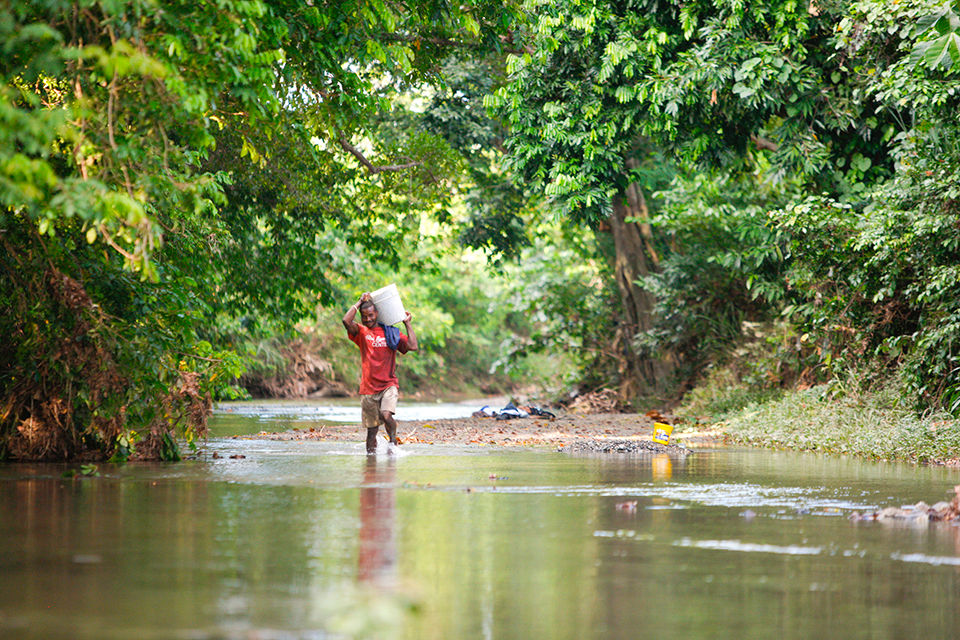
According to World Bank Group, more than 2 billion people lack access to safe drinking water. Unsafe sources are responsible for more than 1.4 million deaths each year and are the leading risk factor for infectious diseases like cholera, typhoid, dysentery, E. coli, and hepatitis A. This water is usually collected from unprotected wells or surface sources such as lakes, dams, ponds, and streams. Globally, one in four people lack access to safely-managed drinking water. Individuals in low-income regions account for more than 70 percent of those adversely affected.
Every country where Vapor serves ranks among the most marginalized when it comes to
securing safe water. While clean water provision is not the sole focus of our outreach initiatives, it is a key pillar in helping transform impoverished communities.

In Togo, for example, less than 20 percent of the population has safely-managed water, and 2 million people still can’t access it from a healthy source. More than six percent of all deaths there are attributed to unsafe water – nearly three times the global average.
Unsafe water-related deaths run twice the global norm in Kenya, where improved water sources elude more than 15 million residents, and nearly 23 percent of Haitians struggle with this same problem.
Water quality is only part of the crisis. Accessibility, transportation, and cost are also barriers individuals must overcome. People, women and children in particular, routinely haul between 15 to 100 pounds of water by foot many miles along busy streets, through farm land, and up mountainsides. And while the fees associated with collecting water at most public access points might be considered nominal at just a few cents per liter, most individuals in the communities we serve are willing to travel greater distances to save what little money they have by collecting free water at our centers.


The construction of every Vapor center begins with a master water project. These wells tap into clean water reservoirs ranging from 60 to more than 1,000 feet below ground. Industrial-grade pumps transfer the resource through filtration systems, where necessary, and into water towers which feed one or multiple public-facing distribution points. Thanks to the faithful generosity of our partners this water is available to everyone in the community at no cost.
In 2025 alone, more than 105 million cups of clean water were provided to men, women, and children in need through our seven centers across Africa and Haiti.
And this water provision does so much more than meet a physical need. It creates a foundation for holistic care at Vapor centers, including food programs, education, healthcare services, discipleship leagues, and Gospel-centered outreach.
FUELING SMALL BUSINESSES
“The free Vapor water is the best thing that has happened in this area,” Nekesa said when
discussing the well at the Kawangware center in Kenya. “There are very few water points in the area and the places where you can get it are expensive.”
Before the center opened, she traveled up to 10 kilometers by foot to collect it from the nearest free access point. Nekesa not only uses the water for her in-home needs, she also relies on it to run a small food stand in the heart of the slum. You can learn more about Nekesa in her story here.
Similarly, Komlan uses the water provided at our Togoville center in Togo to run his thriving food business. Many people draw salty water from wells scattered throughout the area. Vapor’s filtration system removes the salt content producing what locals refer to as “sweet water.” Komlan cooks the most sought-after soy cakes in the community thanks to that water supply. You can read his story here.
Some individuals, particularly women living near our centers in Kenya, sell the water itself to
help provide for their families. It’s not uncommon to find them filling jugs before sun-up in
hopes of offering it for a small fee to more affluent families living near the slum or individuals
with disabilities who are unable to navigate the steep terrain themselves. Joyce’s story
illustrates how one mother near our Gichagi center leans heavily on these opportunities to
support her family of five.
KEEPING LIFE FLOWING
“When the poor and needy seek water, and there is none, and their tongue is parched with
thirst, I the Lord will answer them; I the God of Israel will not forsake them.” Isaiah 41:17
“And whoever gives one of these little ones even a cup of cold water because he is a disciple, truly, I say to you, he will by no means lose his reward.” – Matthew 10:42

The Lord is touching hundreds of thousands of lives each year through your generosity. Sufficient hydration, improved hygiene and sanitation, safe cooking practices, and so much more are now possible because of your compassion.
Water is life, and every drop we provide is FREE in His name.

World Water Day is March 22. Please consider a one-time gift to help ensure this critical resource continues to flow in the communities we serve together. And if you are not yet a ministry partner, you can become a difference maker today. Your gift of any amount will help change a life forever. You can make a one-time or recurring donation HERE.
Resources: Institute for Health Metrics and Evaluation’s Global Burden of Disease study, World Bank Poverty and Inequality Platform.